
The Blue Mind
Deepening Our Connection With Water
Written by: Kennedy DuPont, Staff Writer
Visuals by: Lilianna Munoz and Kaleyah Rivera
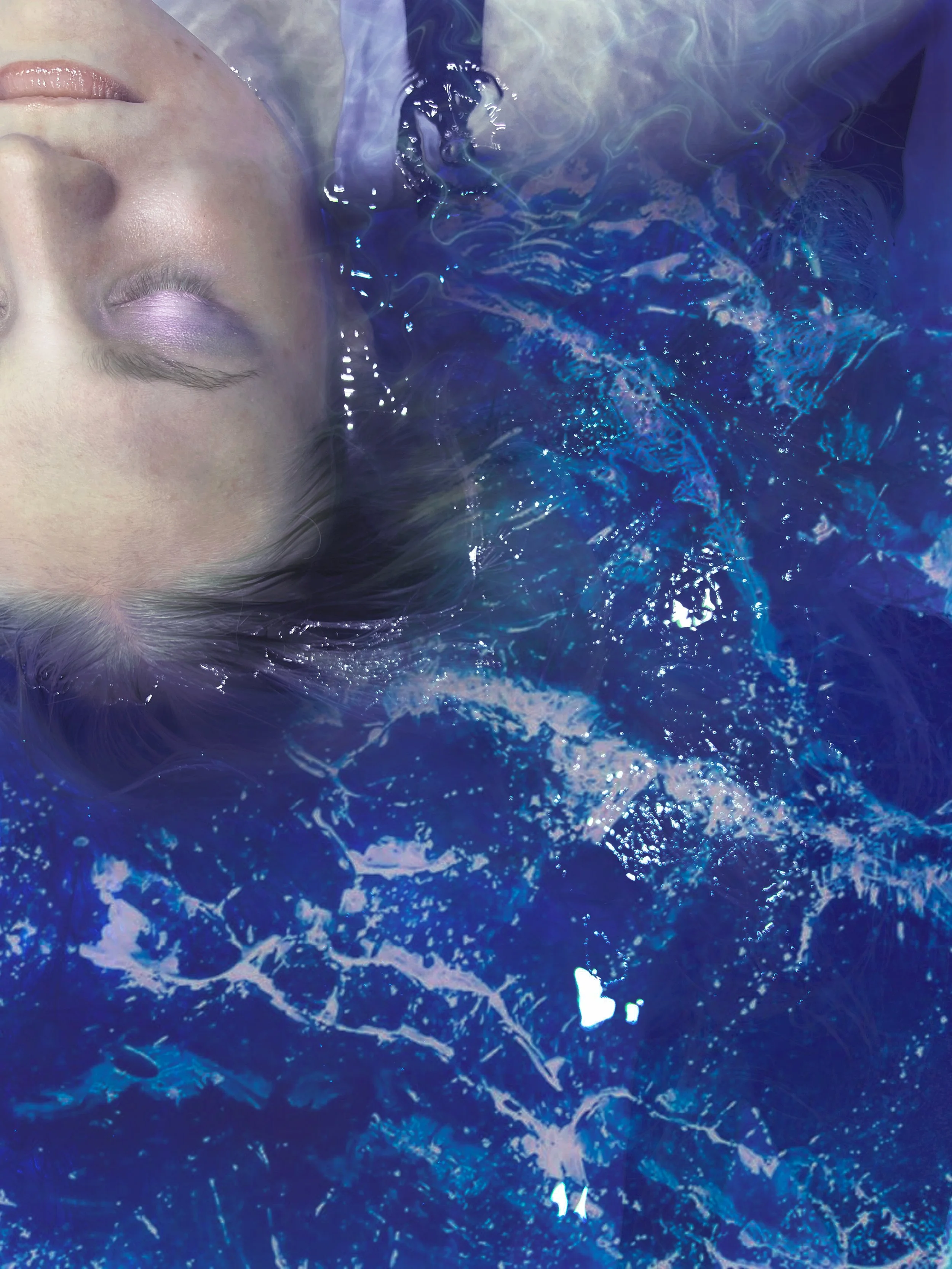
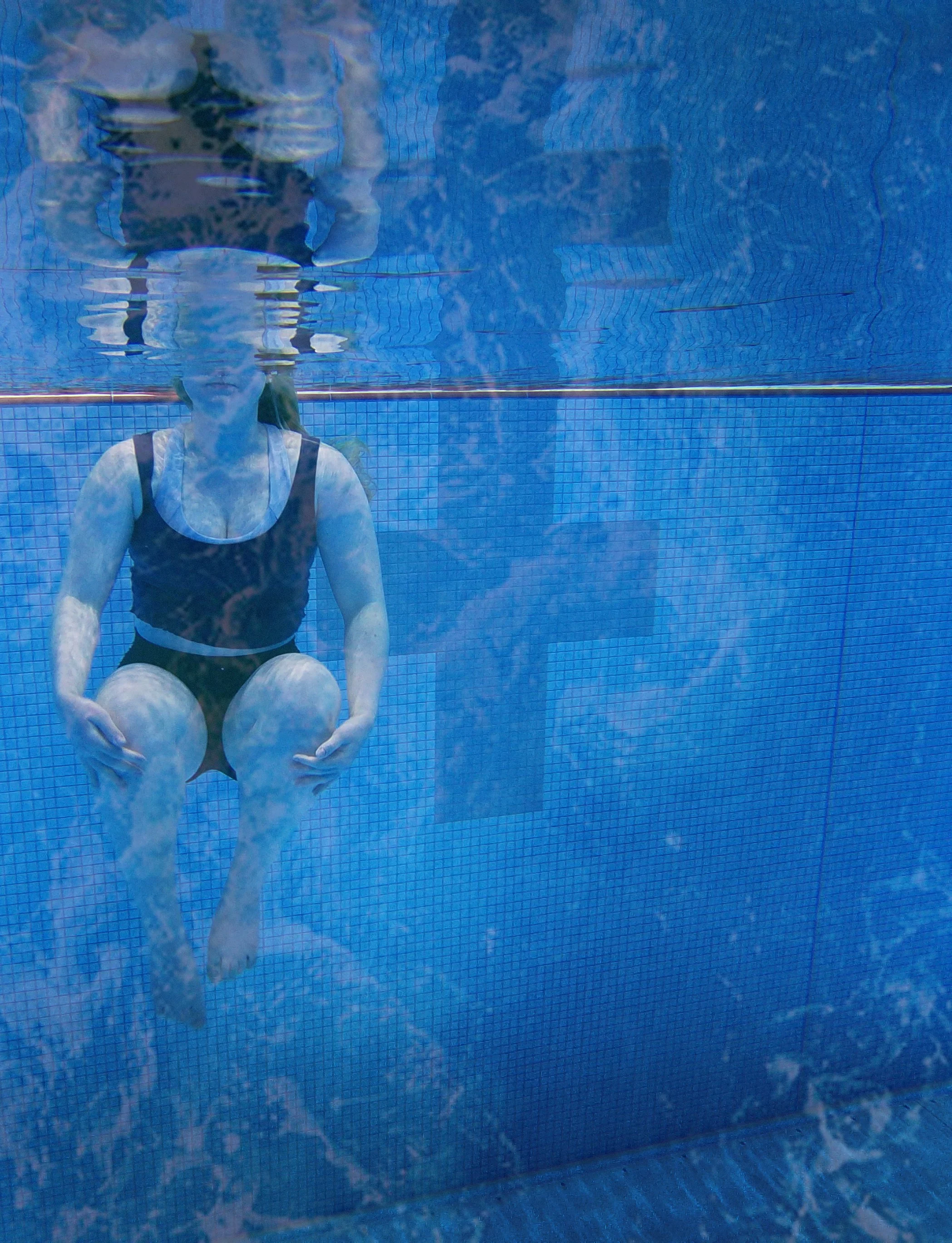
“I wish you water.” – Wallace J. Nichols
The frothy waves rise up the sand and curl around your ankles, sending shocks of cold rippling through your body. The tide recedes, pulling at your toes and beckoning you to join the deep abyss. The current wraps around you like an embrace, filling you with the peace of living things. You float. You swim. You sink. And all at once, you are free.
The meditative state humans experience in and around water is not simply romanticized; it reflects a scientifically grounded psychological state described by Wallace J. Nichols as “Blue Mind.” The late marine biologist released his book “Blue Mind” in 2014, introducing and explaining the therapeutic benefits of proximity to large bodies of water. He developed and spread a new perspective on water appreciation, outlining its many cognitive, physical, spiritual and emotional benefits (Nichols, 2014).
Sebastian Völker and Thomas Kistemann, professors of natural science at the International University of Applied Science in Berlin and the University of Bonn, explored numerous studies to support the positive mental aspects of blue spaces, or environments featuring water. Völker and Kistemann analyzed scholarly experiments focused on human well-being and searched for common patterns to prove the psychology behind the benefits of water features. Ultimately, they found that water doesn’t just sustain life, but shapes it, reducing stress, promoting emotional stability and enhancing overall wellbeing (Völker and Kistemann, 2011). These findings were later incorporated in Blue Mind as scientific evidence of Nichols’ claimed phenomenon.
Surprisingly, the results were not simply limited to large bodies of water in rural areas. Völker and Kistemann (2011) found that people in urban areas could experience the same water-driven tranquility and motivation via canals, large man-made water fountains and urban lakes. In light of these revelations they recommended the redevelopment of cities to include more water features as a way to promote happiness.
Although their research drew from a wide range of fields and methodologies, they advocated for further studies focused explicitly on water to strengthen their theories on the psychological effects of blue spaces. Völker, Kistemann and Nichols encouraged greater cognitive experimentation to support their theories on the benefits of blue spaces and water as a whole (Völker and Kistemann, 2011).
Beyond the research, a practical question remains: How can we stimulate and experience the benefits of the Blue Mind in our everyday lives?
As University of Wisconsin–Madison students, we benefit from our close proximity to Lake Mendota, which can serve as a hub for creativity and peace. However, the demands of daily life often make it difficult to fully engage with water and experience its tranquility.
To address this disconnect, Nichols offers numerous intentional practices to help individuals reap the benefits of the Blue Mind, even on a busy schedule, that can be personalized to the UW–Madison environment:
Simply look at and enjoy the ambience of water.
Listen to meditative water sounds, such as ocean wave white noise.
Take a bath or shower.
Meditate by the water at Memorial Union.
Take a walk along the Lakeshore Path.
Water has always called to us, not just as a resource, but as an escape. It serves as a reminder to ground ourselves and appreciate the world from which we came. When we are around it, we can become our most serene selves, able to connect with nature and all other living beings.
Scientifically, water activates the parasympathetic nervous system and reduces activity in the prefrontal cortex (Nichols, 2014). However, the Blue Mind is more than a scientific concept; it is a cultivated state of mind which allows us to pause. It pulls us in with the tide, sweeping away our bodies and allowing deeper connection with those around us. And in those quiet, reflective moments, this phenomenon reminds us of something essential: Peace is always waiting for us at the water’s edge.
References
Nichols, W. J. (2014). Blue Mind. Little, Brown.
Völker, S., & Kistemann, T. (2011). The impact of blue space on human health and well-being – Salutogenetic health effects of inland surface waters: A review. International Journal of Hygiene and Environmental Health, 214(6), 449–460. https://doi.org/10.1016/j.ijheh.2011.05.001